Blog

  • The Complete Guide to Lead Generation Web Copy

    The Complete Guide to Lead Generation Web Copy

    Lead generation web copy is the difference between a website that gets visited and one that gets booked.

    This is the reality for many UK businesses in 2026. The problem usually isn’t visibility. It isn’t design either. More often than not, it is the words. Your website copy determines whether visitors stay or leave within seconds. It decides whether someone trusts your business enough to book a consultation or continues comparing competitors. Every headline, sentence and call-to-action either builds momentum or creates friction.

    Modern buyers are also behaving differently. AI search tools, Google’s AI Overviews and ChatGPT allow people to research companies long before speaking to a salesperson. By the time someone reaches your website, they have already formed expectations. They are not looking for clever marketing language. They are looking for evidence that your business understands their challenges better than anyone else.

    That means web copy has become one of the highest-return investments a business can make. Good design attracts attention. Exceptional copy converts attention into revenue.

    What Is Lead Generation Web Copy?

    Lead generation web copy is written with one clear objective: encouraging the right visitor to take the next step. That next step could be booking a discovery call, requesting a quotation, downloading a guide, subscribing to a newsletter or arranging a product demonstration.

    Unlike traditional copywriting, lead generation copy doesn’t simply explain what a business does. It removes uncertainty. It answers objections before they arise. It creates confidence by demonstrating expertise rather than simply claiming it.

    Think of your website as your highest-performing salesperson. A great salesperson doesn’t overwhelm prospects with information. Instead, they ask the right questions, understand problems, explain solutions clearly and guide conversations naturally towards a decision. Your website should achieve exactly the same outcome.

    Why Most Business Websites Fail to Generate Leads

    Many companies assume visitors are leaving because prices are too high or competitors offer better services. In reality, visitors often leave because the website gives them no compelling reason to continue. The majority of websites still focus almost entirely on themselves.

    You’ll often find headlines such as:

    • ‘We are an award-winning agency.’
    • ‘Delivering excellence since 2014.’
    • ‘Your trusted digital solutions provider.’

    While these statements may be true, they answer the wrong question. Visitors are silently asking:

    ‘Can you solve my problem?’

    If the homepage fails to answer that within a few seconds, attention disappears. Research from Nielsen Norman Group consistently shows that users scan before they read, taking in signals of relevance first and details second. Every unnecessary sentence increases cognitive effort, making visitors more likely to leave. Winning copy removes that effort.

    The Psychology Behind High-Converting Copy

    People rarely buy services because of features alone. They buy outcomes. A company searching for a new website is rarely excited about responsive layouts or modern code frameworks. What they actually want is more enquiries, stronger credibility, higher conversion rates and faster business growth.

    Successful web copy shifts the conversation from features to transformation. Instead of saying your agency builds responsive websites, explain how those websites reduce bounce rates, improve customer trust and generate more qualified enquiries.

    Every paragraph should answer one simple question:

    ‘Why should this matter to the reader?’

    When copy continually connects business services to business outcomes, conversion rates improve naturally because readers begin imagining success rather than evaluating specifications.

    Start With Your Customer, Not Your Company

    Many websites introduce the business before introducing the customer’s problem. That order should almost always be reversed. The opening section of every important landing page should demonstrate complete understanding of the visitor’s situation.

    • Perhaps they’re frustrated by declining enquiries.
    • Perhaps their website feels outdated.
    • Perhaps competitors appear higher in AI search results.
    • Perhaps marketing activities generate traffic without producing quality leads.

    When readers recognise their own frustrations in your copy, something important happens. They feel understood. Trust begins long before your business introduces itself.

    Only after establishing empathy should your copy explain how your solution removes those challenges. The visitor becomes the hero. Your business becomes the guide.
    UK small business owner reviewing declining website enquiries before improving their lead generation web copy

    The Five Questions Every Landing Page Must Answer

    Before asking anyone to complete a contact form, your copy should quietly answer several important questions. Every high-converting page should communicate:

    • What problem do you solve?
    • Why should someone trust you?
    • What makes your approach different?
    • What result can clients realistically expect?
    • What should visitors do next?

    If even one of these questions remains unclear, hesitation increases. Hesitation is the silent killer of conversions. Visitors rarely complain. They simply leave.
    Flowchart of the five questions every landing page must answer to generate leads

    Clarity Always Beats Cleverness

    Many businesses try to sound sophisticated. Unfortunately, sophisticated language often creates confusion. Compare these examples.

    ‘Our integrated digital ecosystem accelerates scalable organisational transformation.’

    Now compare it with:

    ‘We help growing businesses generate more leads through better websites, SEO and AI visibility.’

    The second version is easier to understand because it speaks the customer’s language rather than internal business jargon.

    This principle applies throughout your website. Choose everyday language over corporate vocabulary. Write naturally. Explain complex ideas simply. The easier your copy is to understand, the easier it becomes for people to trust your business. And trust remains the foundation of every successful lead generation strategy.

    Headlines That Stop Visitors From Leaving

    The headline is the most valuable sentence on your website. Before anyone reads your service descriptions, testimonials or pricing, they read your headline. If it fails to capture attention, the rest of the page rarely gets a chance.

    Many businesses waste this opportunity with generic statements like ‘Welcome to Our Website’ or ‘Professional Digital Solutions’. These phrases could belong to almost any company. They communicate nothing memorable and offer no reason to continue reading. A stronger headline immediately promises value.

    Instead of talking about your business, talk about the visitor’s outcome. Explain the problem you solve and the result people can expect. Visitors should know within a few seconds whether they have found the right solution.

    A simple framework works well:

    Problem + Solution + Outcome

    For example:

    ‘Generate more qualified leads with a website built for conversions, instead of just compliments.’

    That headline speaks directly to business owners who want measurable growth rather than attractive design alone. The best headlines reduce uncertainty. They reassure visitors that they’re in the right place before they have even started reading the rest of the page.

    Every Page Needs One Clear Next Step

    One of the biggest conversion mistakes is asking visitors to do too much. Some websites offer six different buttons, multiple contact forms, newsletter subscriptions, downloadable guides, chatbot pop-ups and social media links all competing for attention. Instead of increasing engagement, this creates decision fatigue.

    High-converting websites usually have one primary goal for each page. If the page exists to generate consultations, every section should gradually move visitors towards booking that consultation. Your calls-to-action should also explain the value of clicking.

    Compare these examples.

    Weak CTA

    ‘Submit’

    Better CTA

    ‘Book Your Free Strategy Call’

    The second version removes uncertainty and explains exactly what happens next. Good CTAs reduce perceived risk by making the next step feel simple, helpful and worthwhile. For the underlying formulas behind CTAs like this, see our breakdown of the psychology of the CTA.

    Trust Converts Better Than Persuasion

    Visitors are naturally sceptical. They’ve seen exaggerated promises before. They’ve read claims about being ‘industry leaders’ and ‘award-winning experts’ countless times. Trust is no longer built through self-promotion. It is built through evidence. Rather than telling visitors you’re experienced, demonstrate it through proof.

    Effective trust signals include:

    • Client success stories
    • Verified reviews
    • Industry certifications
    • Case studies with measurable results
    • Recognisable client logos
    • Media mentions
    • Awards and partnerships

    These elements quietly answer an important question every buyer asks:

    ‘Can I trust this company?’

    The stronger your proof, the less persuasion your copy requires.

    Write For Humans First, AI Second

    Search behaviour has changed dramatically over the past two years. People now ask ChatGPT, Google AI Overviews and voice assistants complete questions instead of typing short keywords. That means your copy should sound like natural conversation. Instead of forcing exact-match keywords into every paragraph, answer genuine customer questions clearly and directly.

    Imagine a business owner asking:

    ‘How can I generate more enquiries from my website?’

    Your content should answer that question exactly as a consultant would during a meeting. Natural language improves readability, increases trust and gives AI search engines clearer context about your expertise.

    Ironically, writing more naturally often improves SEO because modern search algorithms increasingly reward relevance, clarity and topical authority rather than keyword repetition. The future belongs to websites that educate before they sell.

    Remove Friction Wherever Possible

    Every additional obstacle reduces conversions. Sometimes the problem isn’t the offer. It’s the effort required to accept it. Ask yourself how many unnecessary barriers exist on your website.

    • Perhaps your contact form asks for twelve fields instead of four.
    • Perhaps pricing is completely hidden.
    • Perhaps visitors must navigate through several pages before finding basic information.

    Every extra click increases the chance of abandonment. Simplify wherever possible. Small improvements often produce surprisingly large gains. Look for opportunities to:

    • Shorten enquiry forms.
    • Reduce unnecessary navigation.
    • Make pricing expectations clearer.
    • Improve page speed.
    • Add answers to common objections before visitors ask them.

    The easier your website feels to use, the more likely people are to complete their journey. If auditing every page yourself feels like a lot to take on, our digital marketing team can rebuild the messaging and conversion strategy alongside you rather than leaving you to guess.

    Measure What Actually Matters

    Many businesses celebrate increasing website traffic while ignoring the only metric that truly matters. Conversions. Ten thousand visitors mean very little if nobody makes contact. Instead of focusing solely on page views, monitor the numbers that influence revenue.

    Track metrics such as:

    • Contact form submissions
    • Discovery call bookings
    • Landing page conversion rates
    • Average engagement time
    • Scroll depth
    • Lead quality
    • Cost per qualified enquiry

    These insights reveal whether your copy is genuinely persuading visitors or simply attracting attention. Great copywriting is never based on assumptions. It evolves through testing, measurement and continuous improvement. Even changing a headline, restructuring a page or rewriting a call-to-action can significantly increase conversion rates over time.

    The Future Of Lead Generation Copy

    Lead generation is changing. AI search engines increasingly summarise information before visitors even click through to websites. Buyers conduct extensive research independently before speaking with sales teams. Trust now develops across multiple digital touchpoints rather than during a single website visit, which is why copy can’t be treated in isolation from the rest of your marketing — see our digital marketing guide for UK businesses for how it fits alongside SEO, paid search and content strategy.

    This means web copy has a much larger role than simply filling empty spaces on a page.

    • It must educate.
    • It must reassure.
    • It must demonstrate expertise.
    • It must position your brand as the obvious choice before competitors even enter the conversation.

    Businesses that continue writing purely for search engines will struggle. Businesses that write for people, while making their expertise easy for AI systems to understand, will continue attracting qualified leads as search evolves.

    The principles remain timeless.

    • Understand your audience.
    • Communicate clearly.
    • Build trust.
    • Guide action naturally.

    Everything else supports those foundations.

    Frequently Asked Questions About Lead Generation Web Copy

    How long do visitors actually spend reading a web page before deciding to leave?

    Not long, and most of that time is spent scanning rather than reading. Nielsen Norman Group’s research found that 79% of users scan any new page rather than reading it word for word, and on average people only read 20 to 28% of the words on a page during a visit. That is why headlines, subheadings and the first line of each section carry most of the weight.

    What makes a call-to-action convert better than a generic one?

    Specificity and clarity. A CTA like ‘Submit’ describes an action with no value attached to it, while ‘Book Your Free Strategy Call’ tells the visitor exactly what happens next and what it costs them. The stronger version reduces perceived risk by making the outcome feel simple and worthwhile rather than vague.

    Should website copy be written for humans or for AI search engines like ChatGPT?

    Humans first. Writing in natural, direct language that answers real customer questions tends to perform better with AI search tools too, because those systems reward clarity, relevance and topical authority over keyword repetition. Copy written purely to satisfy search algorithms usually reads awkwardly and converts worse for actual visitors.

    Does shortening a contact form actually increase leads?

    Often, though not automatically. HubSpot’s analysis of tens of thousands of contact forms found that conversion rates rose by nearly half when the number of fields dropped from four to three. That said, other studies have found the opposite in specific cases, so form length matters less than whether every remaining field is genuinely necessary for that stage of the enquiry.

    What is the actual difference between traditional copywriting and lead generation copywriting?

    Traditional copywriting often focuses on describing a business clearly and professionally. Lead generation copywriting goes further: it is written with one specific action in mind, actively removes the doubts a visitor is likely to have, and guides them towards that action rather than simply informing them.

    How many trust signals should a landing page include?

    There is no fixed number. What matters is relevance and proof: a couple of specific, verifiable signals such as a named case study with real results or genuine client reviews will usually do more for conversions than a long row of generic badges and logos.

    Last But Not Least

    Your website is often the first conversation potential customers have with your business. Every headline, paragraph and call-to-action either builds confidence or creates doubt. Strong lead generation copy doesn’t rely on clever slogans or aggressive sales tactics. It removes uncertainty, answers genuine questions and makes taking the next step feel effortless. As AI search reshapes how buyers discover businesses, clear and authoritative copy has become more valuable than ever.

    At Prox, we combine strategic messaging, UX, SEO and Generative Engine Optimisation (GEO) to create websites that don’t simply attract visitors. In fact they convert them into qualified leads and long-term customers along with so many success stories.

  • How to Design a Website That Builds Trust in the UK Market

    How to Design a Website That Builds Trust in the UK Market

    A website that builds trust does not happen by accident. It is engineered, section by section, decision by decision.

    This is where most websites fail quietly. Not because they look bad but because they do not feel stable, clear or grounded. A website can be visually impressive and still lose trust if it creates confusion or hesitation in the user’s mind.

    And in 2026, hesitation is expensive. Because users are no longer comparing you to one competitor. They are comparing you to every smooth digital experience they had last week. So the real challenge is simple. Your website must reduce doubt faster than it creates it.

    Trust Is No Longer a Design Layer. It Is a Behavioural System

    Older websites treated trust as something you added at the end of a project. You would finish the homepage, polish the design and then add testimonials, logos and badges in the footer. That approach no longer works.

    Modern UK users do not treat trust as a separate section of a website. They experience it continuously through structure, clarity, speed and tone. A trust-first website behaves differently from a traditional one. It does not try to impress users with complexity. It guides them with simplicity. It does not overwhelm them with information. It prioritises clarity at every step of the journey.

    This shift matters because trust is no longer built through persuasion. It is built through reduction of friction. The less effort a user needs to understand you, the more credible you appear.

    How UK Users Actually Judge Trust in 2026

    Most founders assume trust comes from branding or visuals. In reality, UK users rely on far more practical signals.

    They ask silent questions while browsing, such as:

    • Does this business look real or overly polished in a suspicious way?
    • Can I find contact details without searching too much?
    • Do they clearly explain what they do and where they operate?
    • Is there evidence that real customers have used them?
    • Does this feel consistent or slightly thrown together?

    These judgments happen quickly and subconsciously. Users rarely articulate them but they act on them immediately. This is why many websites lose potential customers without any obvious reason.

    Everything looks fine from the outside. But inside the user’s mind, small uncertainties accumulate until they decide to leave. Trust is often lost in silence instead of confrontation.
    Faceted glass crystal illustration representing the scrutiny behind a website that builds trust

    Old Websites vs Modern Trust-Driven Websites

    To understand how trust design has evolved, it helps to compare older website thinking with modern expectations.

    Traditional websites focused heavily on presentation. The goal was to showcase services, explain the business and look professional. Navigation was often structured around pages rather than user intent. Teams created separate pages for separate messages, a homepage to introduce the business, service pages to explain offerings, a contact page to close the loop. That structure made sense when users moved through websites in a straight line. They rarely do that anymore.

    Modern websites operate differently. They behave like guided systems that remove uncertainty step by step. Instead of showing everything, they reveal information in a controlled flow that matches user behaviour. Even if a visitor lands directly on a service page instead of the homepage, the structure should still give them context, reassurance and direction.

    The difference can be understood simply. Older websites ask users to explore. Modern websites guide users to decide.

    Older structure:

    • Homepage as introduction
    • Separate pages for services and information
    • Trust elements placed at the bottom or secondary areas

    Modern structure:

    • Immediate clarity on what the business does
    • Trust signals integrated early in the experience
    • Actions available at every stage without friction

    This shift is not cosmetic. It directly impacts conversion and user confidence. A website that forces users to think too much loses them faster than a simple, direct one.

    Clarity Is the Strongest Trust Signal in the UK Market

    If there is one consistent rule across high-performing UK websites, it is this. Clarity always wins. Users do not want to decode your messaging. They do not want to interpret abstract branding statements. They want immediate understanding.

    A common mistake businesses make is trying to sound impressive instead of being clear. They use broad, vague language that feels polished internally but confusing externally.

    For example, a statement like ‘We deliver innovative digital transformation solutions’ might sound sophisticated in a boardroom, but it does very little for a visitor trying to understand what you actually do.

    Compare that to something simple like ‘We design and build websites for UK service businesses and startups.’

    The second version builds trust faster because it removes uncertainty immediately. In the UK market, clarity is the new rich as a form of communication and reassurance. And reassurance is the foundation of trust.

    The Role of Real Proof in Building Credibility

    One of the strongest trust signals in modern web design is not colour, typography or layout. It is evidence. UK users actively look for proof that your business exists beyond the website itself. They want to see real indicators such as completed work, customer feedback and tangible results.

    This is why websites that rely too heavily on stock imagery often struggle with credibility. Stock photos do not create doubt by themselves but they also do not remove it. Real proof does.

    This includes:

    • Genuine project images instead of generic visuals
    • Case studies that explain real outcomes
    • Customer reviews linked to real platforms
    • Clear service coverage areas that feel grounded in reality
    • Team or business identity that feels authentic
    • Visible security and data-handling practices, the kind we cover in our website security best practices guide, which matter just as much once a visitor is ready to hand over contact or payment details

    Independent researchers agree on this point. Nielsen Norman Group’s research on web credibility identifies design quality, up-front disclosure and current content as core factors in whether a website feels trustworthy. Proof is one of the few signals users check almost instinctively, often without realising it.

    The goal is not to overwhelm users with information. It is to show enough reality that doubt naturally decreases. Trust is rarely created through claims. It is created through confirmation.

    What a Website That Builds Trust Looks Like: Simplicity Over Complexity

    There was a phase in web design when complexity was seen as innovation. Heavy animations, layered visuals, experimental layouts and dramatic transitions were all signs a business had invested in its digital presence. That era has quietly ended.

    In 2026, simplicity signals maturity. A clean, structured, easy-to-navigate website feels more reliable than one that tries too hard to impress, especially in the UK market, where users value practicality over spectacle. A cluttered interface reads as unnecessary effort, and unnecessary effort reduces confidence.

    Good websites now focus on calm design systems. They avoid visual noise, prioritise spacing and keep key actions obvious. This does not mean design should be boring. It means design should be controlled. There is a subtle but important difference between creativity and confusion, and modern trust-focused websites understand it well.

    Interestingly, many high-converting UK websites now feel slightly ‘unexciting’ at first glance. That is intentional. They prioritise understanding over entertainment, because no one hires a service provider just because their website looked like a film trailer. Simple layouts, readable typography and consistent spacing create a sense of control, and that sense of control is what turns browsing into enquiries, bookings and purchases.

    Navigation Used to Organise Information. Now It Must Reduce Thinking

    Older websites treated navigation like a map. Everything had to be listed clearly so users could ‘choose where to go.’ The problem is that too many choices create hesitation. Modern UK websites simplify navigation aggressively, not because they lack content, but because they understand how users behave under decision pressure. A trust-first navigation system does not try to show everything. It focuses only on the paths that matter most.

    Instead of overwhelming users with categories, modern navigation highlights clear intent-based actions such as services, pricing, contact or key solutions. The goal is not to display structure. The goal is to remove thinking.

    When users do not need to interpret where to click, they feel more confident about continuing. And confidence builds trust faster than any visual design choice.
    Illuminated pathway illustration representing simplified navigation and trust signals in UK web design

    Trust Architecture Matters More Than Visual Design

    One of the biggest misunderstandings in web design is thinking that trust comes from visuals. In reality, trust comes from architecture. Trust architecture refers to how information is structured and revealed across a website. It determines when users see proof, how they access key information and how smoothly they move from curiosity to action.

    For example, a poorly structured website might hide pricing logic, bury contact details and delay proof until the bottom of the page. Even if the design looks good, users feel uncertain.

    A strong trust architecture does the opposite. It places clarity early, supports claims with evidence and keeps essential actions visible throughout the experience. This structure quietly answers user concerns before they even form fully. And that is what makes it powerful. It is also only one part of the picture, since structure, speed, accessibility and content all work together, which is why we cover the full framework in our web design guide for UK businesses in 2026.

    Common Trust Mistakes UK Websites Still Make

    Despite better tools and better awareness, many websites still repeat the same mistakes.

    • One of the most common issues is over-designing the homepage while neglecting supporting pages. This creates a disconnect where the entry experience feels polished but deeper pages feel inconsistent or unclear.
    • Another issue is unclear messaging. Businesses often describe themselves in abstract or overly creative language that sounds impressive internally but confusing externally.
    • A third mistake is hiding key information. Users should not have to search for contact details, pricing guidance or service areas. When they do, trust drops immediately.

    There is also a tendency to rely too heavily on generic stock visuals. While they may look clean, they do not reinforce authenticity. UK users are particularly sensitive to this because they are used to evaluating real businesses instead of polished illusions.

    Fixing these issues does not require complex redesigns. It requires discipline in clarity and consistency. For a wider checklist beyond trust specifically, our 10 web design best practices for UK businesses covers the same ground in more detail.

    Practical Ways to Build Trust Into Your Website System

    Building trust is not about adding more elements. It is about improving how existing elements work together.

    • One of the most effective approaches is to ensure every page answers three silent user questions. What does this business do, why should I trust them and what should I do next. If any of these questions remain unanswered, hesitation increases.
    • Another practical improvement is consistency. Fonts, spacing, tone of voice and visual patterns should remain stable across the entire website. Inconsistency creates subconscious doubt even when users cannot explicitly explain it.
    • Speed also plays a critical role. Slow websites feel unreliable, even if the content is strong. In the UK market, where users expect instant access, even small delays can damage perception.
    • Finally, contact accessibility matters more than most teams realise. If users cannot easily find a way to speak to you, they assume the business is less responsive than competitors. Trust is often lost not in big moments but in small moments of friction.

    If you would rather have this built in from the start than fix it after launch, our web design and development team can architect the structure, speed and proof points together instead of bolting trust on at the end.

    Why UK Users Respond Strongly to Transparency

    UK audiences tend to value straightforward communication. They are not easily convinced by exaggerated claims or overly polished branding language. Instead, they respond better to transparency.

    This includes clear explanations of services, honest descriptions of process, visible contact options and realistic expectations around pricing or timelines. When a website feels honest, users relax. And when users relax, they are far more likely to convert.

    This is why overly ‘salesy’ websites often underperform in the UK market. They try to persuade too quickly instead of building confidence first. Trust always comes before conversion. Never after it.

    Frequently Asked Questions About Website Trust and Design

    How quickly do visitors decide whether to trust a website?

    Research from Carleton University found that users form a first impression of a website’s credibility in as little as 50 milliseconds, based almost entirely on visual design rather than content. That snap judgement does not decide everything, but it sets the tone, and users then spend the next few seconds looking for evidence that confirms or corrects it, which is why clarity and structure matter from the very first screen.

    What are the most important trust signals for a UK business website?

    The signals that matter most are the ones that answer a visitor’s unspoken questions quickly: clear contact details, an honest explanation of what the business does and where it operates, genuine proof such as case studies or reviews, and visible security or data-handling practices. None of these require a redesign on their own. They require being easy to find.

    Do UK websites legally need to display company registration details?

    Yes. Under the Companies Act 2006, UK-registered companies must display their company registration number and registered office address somewhere on their website, such as the footer or contact page. It does not need to appear on every page, but it must be easy to find, and failing to include it can result in a fine.

    Does adding trust signals actually improve conversion rates?

    Yes. Baymard Institute research asked thousands of online shoppers why they abandon a purchase at checkout, and nearly one in five cited not trusting the site with their payment details as a reason, which shows how directly perceived trust affects revenue rather than just perception.

    Is a simple website design more trustworthy than a highly animated one?

    Generally, yes, for UK service businesses. Heavy animation and experimental layouts can look impressive in isolation, but they slow down comprehension, and users read that friction as effort rather than polish. A calm, structured layout tends to convert better because it lets people find what they need without thinking about the interface itself.

    How is a trust-driven website different from a normal business website?

    A standard website presents information and expects visitors to explore it. A trust-driven website is structured as a guided journey. It anticipates the questions a visitor is silently asking at each stage and answers them in order, so hesitation is reduced before it has a chance to build.

    Trust Is a System Not a Style Choice

    Designing a website that builds trust in the UK market is not about decoration or visual trends. It is about how the entire system behaves when users interact with it. Older websites focused on pages and presentation. Modern websites focus on journeys and decision-making. That difference determines everything from bounce rates to enquiries to long-term brand perception.

    The most successful websites in 2026 are not the most complex. They are the most reliable. They communicate clearly, reduce friction and guide users without confusion. For founders and teams trying to improve performance, the lesson is simple.

    Do not start with visuals. Start with structure. Do not focus on impressing users. Focus on helping them understand. At Prox Digital Agency, we build websites with this exact principle in mind. Not just websites that look good but systems that earn trust quickly and convert consistently in real UK markets. Because in the end, a website is not just a digital presence. It is your first conversation with a customer.

  • How UK Startups Are Building Apps on a Budget

    How UK Startups Are Building Apps on a Budget

    Keeping app development cost UK-wide under control is the single biggest question every founder asks before writing a line of code.

    How? Simply by utilising no-code platforms, AI-assisted coding, and strict Minimum Viable Product (MVP) frameworks. But that’s not it. Other dos and don’ts can lead you towards a successful startup that generates revenues without emptying your pockets.

    In this guide, we’ll pinpoint the factors that influence Mobile App Development Cost UK 2026 and explore practical ways to keep your app within budget. Here’s the playbook to follow. Whether you go it alone or lean on a creative digital agency London trusts for budget-conscious builds, this strategy works undoubtedly. For the fuller roadmap, see our guide to building an app for your small business.

    Create a Roadmap Before Writing Code

    The most expensive mistake you can make isn’t picking the wrong technology – it’s starting without a watertight plan. Even the thought of “just one more feature” can easily burn your cash. So, before jumping into the coding, gather your team and create a clear roadmap of your startup and its objectives. 

    Jot down three simple things at this point.

    • The single problem that your app will solve.
    • The target audience who will utilise it.
    • The core features, and the only features that they will genuinely need.

    Once you’re done finding the answers to these three questions, apply the MoSCoW method to label each one: Must-have, Should-have, Could- have, and Won’t have.

    Prox Digital Agency ruthlessly follow this strategy to begin building your startup app.

    Create an MVP That Reaches the Market

    Minimum Viable Product sounds obvious until you’re in the thick of it, convincing yourself users will need video calling, AI recommendations and social sharing before they’ll even sign up. They won’t. 

    Let’s imagine this! You need a telehealth platform for your health-tech startup. You launched with a single feature that says “Book your physio and get a personalised exercise + diet PDF.” You came up with the final build that took 8 weeks, cost you only £18,000, and provided you with a bonus of real-user feedback.

    That’s exactly what a budget-friendly startup needs. Ship one thing that works beautifully, then iterate. Investors and early adopters respect a live product, not perfect. If you’re still defining what belongs in your MVP, see our full breakdown of what an MVP actually is.

    Pick the Right Development Path for Your Startup

    Not every route to a built app costs the same. There are four startup app development routes you can choose from. They are cost-effective, lean and also ROI focused.

    Abstract visualization of choosing a development path that shapes app development cost UK-wide

    Low Code or No Code Platform

    Choose Low or no-code platforms to begin with. They are cheaper and best for MVPs, internal tools, simple marketplaces, and idea validation. This route will cost you £5,000 – £20,000, depending on the features you require. The launch-ready design only takes 4 to 8 weeks to build, and you’re all set to launch your idea in the market.

    The possible trade‑off for low code platform is customisation and scalability. When you hit 100,000 users, you might need to rebuild your app.

    Freelance Developers 

    Many freelance developers offer some of the most affordable rates for building a custom MVP with moderate complexity. They typically cost between £15,000 and £50,000, and can turn around a launch-ready app design in 8 to 16 weeks. But in this case, it’s a little tricky to find just the pros. We’ve ranked the top UK app design studios and freelancers if you want a shortlist to start from.

    Cross‑platform Frameworks

    With frameworks like React Native and Flutter, you can use the same code base for both iOS and Android versions of your MVP. The standard price of this approach is between £30,000 and £80,000 and it takes about 12 to 20 weeks to develop.

    Cross-platform frameworks are particularly ideal for polished consumer apps and seed-stage startups in the UK. In the past, maintaining separate codebases for iOS and Android was often the only option.

    Many startups mix and match these strategies, depending on the founders’ business objective. You might want to go with a no-code prototype and switch to the cross-platform build later. 

    If you want a trusted partner to guide your product journey without stretching your budget, Prox is an app development company London startups rely on, offering strategic expertise at startup-friendly rates while helping you avoid costly shortcuts.

    Design Without the Designer Price Tag

    If you’re planning to go with Bespoke UI/UX for your MVP design, you’re going to regret it because they can swallow your thousands before even building a button.

    Choose from ready-made UI kits such as Material Design, Apple’s Human Interface Guidelines and templates from Envato or Creative Tim. Imagine you spent £49 on a template, fixed the brand colour theme and got feedback describing your design as “clean and innovative.” Sounds encouraging? Right! 

    Start with proven patterns and customise later when revenue justifies it.

    Keep the Backend Boring and Cheap

    It’s tempting to architect a scalable cloud infrastructure on day one. Stop right there! Backend-as-a-Service tools like Firebase, Supabase or AWS Amplify handle authentication, databases, and push notifications for low rates or often free until you hit thousands of users. 

    An Edinburgh community app ran on Firebase for eight months with a monthly bill of under £20. This approach reflects why app development for London startups often prioritises cost-efficient tools, leaving more budget for SEO, user acquisition, and growth marketing.

    Test Like Your Launch Depends on It (Because It Does)

    Skipping proper testing to save cash is a false economy that leads straight to one‑star reviews and an uninstall rate that’ll break your heart. But you don’t need an expensive dedicated QA team for testing. Here’s what you can do instead.

    • There are beta testing platforms available that let real users try your app before its public launch. They are cheaper yet effective. Platforms include TestFlight (iOS) and Google Play’s open testing.
    • Utilise automated testing tools that run regression tests overnight, and detect bugs that would otherwise take hours of manual clicking.
    • Let the early‑adopter communities on Reddit, Indie Hackers, or even a private Facebook group hunt for issues in exchange for early access and a bit of recognition. This one also helps in marketing your MVP.

    Plan for Post-Launch Costs

    Startup owners often stop talking about investments right after the launch. That’s a big mistake! Even the MVPs require post-launch cost conversations for ongoing expenses. 

    Abstract illustration of the budgeting stages that make up app development cost UK-wide

    • App stores charge platform fees too: the Apple Developer Program costs £79 ($99) per year, while Google Play charges a one-off $25 (roughly £20).
    • Set aside 15-20% of your budget for maintenance and updates, including OS updates, bug fixes and minor improvements.
    • App security features like privacy policy, terms of service, and GDPR require a budget of £1,000–£2,000.
    • Service charges also consume a portion of your budget on a monthly or annual basis.
    • Marketing is the silent budget killer. Even a modest paid user‑acquisition campaign in a competitive niche can become heavy on the entire development cost.

    Luckily, Prox offers the most affordable mobile app development cost in UK for MVPs and startups with a tight budget. You can discuss with our experts about post-launch costing and we’ll get back to you with a foolproof final plan.

    Build Your Startup on Your Budget

    The UK is in a golden window for lean app building. Talent is global, tools are cheap, and the best agencies are available. The ones that genuinely care about startup budgets are right here. 

    Whether you’re hiring a freelancer, a no-code builder, or partnering with a creative digital agency in London, the path to a live app has never been shorter or more affordable. 

    At Prox, we specialise in walking UK startups through exactly this process: no fake promises, no hidden fees, just an app that does what your business needs while respecting every pound of your budget. Therefore, hire Prox app developers London startups rely on because your idea deserves to be in users’ hands, not stuck in a spreadsheet.

    Once your app is live, our round-up of the top AI features worth adding in 2026 is a good next stop.

    FAQs About App Development Cost UK

    What is the app development cost for a UK startup?

    A simple startup app development cost starts from £15,000 to £30,000. While the complex builds can exceed your budget by £150,000. 

    What is the cheapest way to build an app in UK?

    The cheapest way to build an app in the UK is by utilising no-code platforms that offer production-ready solutions for startups. They’re ideal for testing ideas and can serve thousands of users. They have customisation limits, but for a first version, they cut development costs by 60–80%.

    What is the 50/30/20 budget rule for app development?

    Applied to an app project, the 50/30/20 rule means allocating roughly 50% of your budget to core build essentials, 30% to secondary features and growth, and 20% to a buffer for post-launch fixes, updates and marketing. It’s a simple way to stop feature creep from swallowing your entire budget.

    Does SEO optimisation matter for a startup app building?

    Absolutely, but mainly through App Store Optimisation (ASO), such as keyword research, strong titles, clear descriptions and good ratings for organic downloads. Traditional SEO for your app’s website or landing page also encourage installs, so it should be part of your launch plan.

    How long does it take to build an app on a budget?

    Timelines scale with your chosen route. No-code platforms can get a launch-ready build done in 4 to 8 weeks, freelance developers typically need 8 to 16 weeks, and cross-platform framework builds like React Native or Flutter usually take 12 to 20 weeks. Most budget-conscious UK startups start with the fastest option and rebuild once revenue justifies it.

    Do I need to hire a developer to build an MVP?

    Not necessarily. Many UK startups validate their first MVP entirely on no-code platforms or with AI-assisted coding tools before ever hiring a developer. A developer becomes worth the cost once you need custom functionality, need to scale past a no-code platform’s limits, or want a codebase you fully own.

  • Core Web Vitals: How Page Experience Affects Your Rankings

    Core Web Vitals: How Page Experience Affects Your Rankings

    Core Web Vitals have become one of the clearest signals Google uses to judge whether a website deserves to rank well. The same thing happens online every day. Businesses invest heavily in SEO, content marketing, backlinks, paid advertising and conversion optimisation. Then they send visitors to websites that load slowly, jump around while loading or respond sluggishly when users try to click a button. Visitors become frustrated before they have even read the first sentence. Google notices those poor experiences too. As a result, rankings suffer, engagement drops and valuable traffic disappears. In 2026, page experience is no longer a technical consideration sitting quietly in the background. It plays a direct role in how users perceive your business and how search engines evaluate your website.
    It’s now a core part of how web development works for growing businesses.

    The Internet Has Changed And Google Changed With It

    Ten years ago, ranking on Google was often a fairly straightforward exercise. Create content around a target keyword, build a reasonable backlink profile and wait for the rankings to improve. User experience certainly mattered, but it rarely dominated SEO conversations in the way it does today. Many websites achieved strong rankings despite being slow, clunky and difficult to use because Google had fewer ways to measure real-world user satisfaction.

    Today, the landscape looks completely different. Google now evaluates not only the relevance of your content but also the quality of the experience users receive when they land on your website. A page might contain the most comprehensive information available on a topic, but if visitors struggle to access that information comfortably, Google sees that struggle as a problem. Search engines increasingly reward websites that respect users’ time and attention. That shift has transformed performance from a developer concern into a business concern.

    This evolution explains why Core Web Vitals have become such a significant ranking factor. Google wants to understand something that traditional SEO metrics could never fully capture. How does a website actually feel to use? Does it load quickly? Does it remain stable while loading? Does it respond instantly when someone interacts with it? These questions matter because user expectations have changed dramatically. Nobody celebrates a website that eventually loads. People expect it to work immediately.
    Illustration of a glowing digital speedometer representing Core Web Vitals page speed performance

    What Are Core Web Vitals

    Core Web Vitals are a collection of performance metrics that Google uses to evaluate real-world page experience. Instead of relying solely on laboratory testing or technical benchmarks, Google measures how actual users interact with your website. For the official breakdown, see Google’s own Core Web Vitals documentation. This approach gives search engines a much clearer understanding of what visitors experience when they browse your pages on mobile devices, laptops and tablets across different network conditions.

    The three Core Web Vitals metrics are Largest Contentful Paint (LCP), Interaction to Next Paint (INP), and Cumulative Layout Shift (CLS). Together, they help Google determine whether a website feels smooth, responsive and stable. Rather than viewing them as technical jargon, it is helpful to think of them as indicators of customer satisfaction. They reveal whether visitors can quickly see your content, interact with your pages without delays and browse without annoying layout movements disrupting their experience.

    For founders, marketers and business owners, this matters because Core Web Vitals influence far more than rankings. They affect bounce rates, engagement, conversions and brand perception. A website that performs well often feels more professional and trustworthy. A website that performs poorly can create doubt before a visitor has even considered your products or services.

    Why Google Cares So Much About Page Experience

    Google’s business model depends on trust. Every time someone performs a search, Google makes an implicit promise that it will deliver the most useful and reliable results available. If those search results consistently send users to slow, unstable, frustrating websites, that trust begins to erode. Google’s focus on page experience is therefore not surprising. The search engine has a strong incentive to reward websites that create positive experiences for visitors.

    This is why page experience updates have become increasingly important over the last several years. Google wants users to land on a page and immediately feel comfortable. They should not encounter long loading delays, unexpected layout shifts or frustrating interaction lags. The smoother the experience, the more likely users are to remain engaged with the content. When visitors stay longer, interact more and return in the future, Google receives signals that suggest the page delivered value.

    From Google’s perspective, Core Web Vitals provide measurable evidence of user satisfaction. They allow the search engine to move beyond simply analysing content and begin evaluating the quality of the overall experience. That makes them one of the most important bridges between technical performance and SEO success.

    The Three Metrics Google Watches Closely

    Now that we understand why page experience matters, it is time to look at the three measurements that sit at the heart of Core Web Vitals. Many business owners hear terms like LCP, CLS, and INP and immediately switch off because they sound technical. In reality, these metrics measure something very simple.

    They measure frustration. Google wants to know how much friction users experience while interacting with your website. If visitors can access content quickly, navigate comfortably and interact without delays, your scores improve. If your website creates unnecessary obstacles, your scores suffer.

    Think of Core Web Vitals as a customer satisfaction survey happening silently in the background. Users never fill out a form, yet their behaviour tells Google everything it needs to know. Every delay, layout jump and sluggish interaction contributes to a larger picture of how enjoyable your website feels to use. The better that experience becomes, the stronger your position in search results can be.

    Largest Contentful Paint (LCP) And The Importance Of First Impressions

    The first Core Web Vital is Largest Contentful Paint, commonly known as LCP. This metric measures how long it takes for the main content of a page to appear on screen. In simple terms, Google wants to know when visitors can actually start consuming the information they came for. A blank screen, spinning loader, or half-loaded page does not count as meaningful content.

    Imagine walking into a coffee shop and waiting several minutes before anyone acknowledges your existence. Even if the coffee eventually turns out to be excellent, the first impression has already suffered. Websites work in exactly the same way. Visitors form opinions almost immediately. If your hero image, headline, or primary content takes too long to load, people begin questioning the reliability of the experience.

    Google recommends an LCP score of under 2.5 seconds. That might sound demanding but modern users have become remarkably impatient. Streaming platforms, social media apps and ecommerce giants have trained people to expect near-instant experiences. When your website feels slower than the rest of the internet, users notice. They may not understand why the experience feels frustrating, but they certainly feel it.

    This shift highlights an important lesson for businesses. Speed is no longer just a technical achievement. It has become part of customer experience design. A fast website creates confidence before a visitor reads a single line of content. A slow website creates doubt before your message even has a chance to land.

    Cumulative Layout Shift And The Art Of Staying Still

    The second Core Web Vital is Cumulative Layout Shift, usually shortened to CLS. This metric measures visual stability. In other words, Google wants to know if your website remains steady while loading or if elements jump around unexpectedly.

    Most people have experienced this frustration. You try to click a button, only for an image or advert to load at the last second and push everything down the page. Suddenly, you click the wrong thing. Few online experiences feel more irritating. It is a bit like trying to sit on a chair just as someone quietly moves it. Technically, nobody has broken the rules, but it still leaves you annoyed.

    Older websites often suffered from this problem because designers focused heavily on aesthetics while giving less attention to loading behaviour. Large images, embedded videos, advertisements and custom fonts frequently loaded at different times, causing layouts to shift unpredictably. In 2026, that approach feels outdated.

    Users expect stability. They want websites to behave predictably from the moment they arrive. A stable layout creates a sense of professionalism because it signals that the website has been carefully engineered. Even subtle layout shifts can reduce trust, particularly on mobile devices where screen space is limited and every movement feels more noticeable.

    When businesses improve CLS, they often notice benefits beyond SEO. Conversion rates improve, user engagement increases and frustration decreases. It is a reminder that many technical improvements ultimately serve human needs rather than search engine algorithms.

    Interaction To Next Paint And The Need For Responsiveness

    The newest Core Web Vital is Interaction to Next Paint, or INP. This metric measures how quickly a website responds when users interact with it. Clicking a button, opening a menu, submitting a form or using a search feature all contribute to this score.

    Think about the difference between a conversation with a friend and a conversation with someone who pauses for five seconds before answering every question. Even if the answers are good, the interaction feels awkward. Digital experiences follow the same principle. People expect immediate feedback when they click or tap something. Delays create uncertainty. Users start wondering if the action worked, if the website is frozen or if they need to try again.

    This issue has become increasingly important because modern websites rely heavily on JavaScript, animations, third-party integrations and dynamic content. While these features can create impressive experiences, they often introduce performance bottlenecks. A website may load quickly yet still feel sluggish once users start interacting with it.

    Google introduced INP because page speed alone no longer tells the full story. A fast-loading website that feels slow to use is still delivering a poor experience. Businesses that optimise responsiveness create smoother journeys, stronger engagement and ultimately better outcomes for users and search engines alike.

    Why Core Web Vitals Matter More Than Ever In 2026

    A few years ago, many SEO professionals viewed Core Web Vitals as a secondary ranking factor. Important, certainly, but not critical. That perception has changed significantly. As search results become more competitive, the margin between winning and losing often comes down to small differences in quality.

    Imagine two businesses targeting the same keyword. Both publish strong content. Both have respectable backlink profiles. Both offer similar products or services. In situations like this, page experience becomes a deciding factor. If one website loads faster, responds more smoothly, and creates less frustration, Google has a clear reason to favour it.

    This does not mean Core Web Vitals can magically compensate for weak content or poor SEO strategy. They cannot. However, they increasingly act as a tie-breaker in competitive markets. For businesses operating in crowded industries, that tie-breaker can represent thousands of pounds in additional revenue over time.

    The broader trend is clear. Google wants websites to deliver exceptional user experiences, not simply answer questions. Core Web Vitals help measure that experience in a structured and scalable way.

    How Websites Used To Be Built Compared To Today

    Many performance problems originate from outdated design habits. Older websites often prioritised visual impact above everything else. Designers filled pages with massive image sliders, autoplay videos, complex animations and dozens of third-party plugins. At the time, these features felt innovative. Today, they often feel unnecessary.

    Modern web design follows a different philosophy. Instead of asking, ‘What can we add?’ successful teams ask, ‘What can we remove?’ The goal is not to create the busiest website. The goal is to create the clearest and fastest experience possible.

    This shift reflects a broader change in user expectations. Visitors no longer equate complexity with quality. In fact, many users associate simplicity with professionalism. A clean and responsive website often feels more premium than a flashy website struggling under the weight of unnecessary features. See what else is shaping web development trends for 2026.

    For founders and business owners, this lesson is valuable. Every design decision should support performance, usability and clarity. If a feature slows down the experience without providing meaningful value, it may be doing more harm than good.
    Illustration of glowing interconnected gears and dials representing Core Web Vitals optimization techniques

    Practical Ways To Improve Core Web Vitals

    Improving Core Web Vitals does not always require a complete rebuild. In many cases, a series of focused improvements can produce significant gains. Businesses often achieve noticeable results by optimising images, reducing unnecessary scripts, improving hosting infrastructure and implementing modern caching solutions. For a deeper, developer-focused breakdown, see our Core Web Vitals best-practices guide for developers.

    Another common opportunity involves reviewing third-party tools. Many websites accumulate marketing widgets, chat systems, tracking scripts and integrations over time. Individually, each tool may seem harmless. Collectively, they can create substantial performance problems. A regular audit helps identify which tools genuinely contribute value and which simply add weight. If load time specifically is the bottleneck, see practical steps to cut load time.

    Design teams should also prioritise mobile performance from the beginning of every project. Mobile traffic now dominates most industries and Google largely evaluates websites through a mobile-first lens. A website that performs brilliantly on desktop but struggles on mobile devices risks losing both rankings and customers.

    The most effective approach is to treat performance as an ongoing process rather than a one-time task. Websites evolve constantly. New features, campaigns and content updates can introduce fresh issues. Regular monitoring ensures performance remains aligned with user expectations.

    Quick Wins: Where To Start

    If you only act on five things this month, make it these:

    • Compress and lazy-load images so the largest visible element renders fast (helps LCP)
    • Reserve space for images, ads and embeds before they load (helps CLS)
    • Defer or remove third-party scripts that don’t earn their keep (helps INP)
    • Move to modern hosting with caching built in rather than bolted on
    • Re-test on real mobile devices, not just desktop dev tools

    The Bigger Picture Behind Core Web Vitals

    It is easy to view Core Web Vitals as another technical SEO requirement. In reality, they represent something much larger. They reflect a fundamental shift in how websites are evaluated. Search engines no longer focus solely on information. They increasingly focus on experiences.

    Businesses that embrace this shift gain a competitive advantage. They stop thinking about websites as collections of pages and start viewing them as products that users interact with every day. Every improvement in speed, stability and responsiveness strengthens the overall experience. If you’d like a professional audit, our web design and development agency can help.

    When visitors enjoy using your website, they stay longer, engage more deeply and trust your brand more readily. Search engines notice those positive signals. Over time, better experiences contribute to stronger rankings, better conversions and more sustainable growth.

    Frequently Asked Questions About Core Web Vitals

    What are Core Web Vitals?

    Core Web Vitals are a set of three metrics Google uses to measure real-world page experience: Largest Contentful Paint (LCP) for loading speed, Interaction to Next Paint (INP) for responsiveness, and Cumulative Layout Shift (CLS) for visual stability.

    What is considered a good Core Web Vitals score?

    A page passes Core Web Vitals when at least 75% of visits meet these thresholds: LCP under 2.5 seconds, INP under 200 milliseconds, and CLS under 0.1. Google measures this using real user data from the Chrome User Experience Report over a rolling 28-day period.

    How can I check my website’s Core Web Vitals?

    The most reliable ways are Google Search Console’s Core Web Vitals report, which shows real user data for your whole site, and PageSpeed Insights, which gives a page-by-page breakdown alongside lab-based recommendations.

    Do Core Web Vitals directly affect Google rankings?

    Yes, Core Web Vitals are part of Google’s page experience signals and factor into ranking, though relevance and content quality still carry more weight. Where two pages are similarly relevant, better page experience can be the deciding factor.

    What happened to First Input Delay (FID)?

    FID was officially retired and replaced by Interaction to Next Paint (INP) as a Core Web Vital in March 2024. INP gives a fuller picture of responsiveness because it measures the full interaction, not just the initial delay.

    Final Thoughts Before You Leave

    Core Web Vitals are not just about pleasing Google. They are about respecting your visitors’ time. Every second saved, every layout shift prevented and every interaction improved creates a smoother experience for real people. That is why these metrics continue to grow in importance.

    The businesses winning organic search in 2026 are not simply publishing more content. They are delivering better experiences. They understand that rankings, conversions and customer trust are closely connected. A fast, stable, responsive website creates confidence. A frustrating website creates doubt.

    At Prox Digital Agency, we see this every day. Businesses often focus on keywords, backlinks and content strategies while overlooking the experience users receive after arriving on the website. Yet that experience frequently determines whether visitors stay, convert or leave for a competitor.

    In the end, Core Web Vitals are not really about metrics. They are about people. Improve the experience for people and the rankings usually follow.

  • This Week, Prox Transformed KAVERO’s Digital Experience

    This Week, Prox Transformed KAVERO’s Digital Experience

    KAVERO Camp was struggling to convert website traffic as the camping season had already ended. This is a common challenge many seasonal businesses experience after their peak season ends. That’s when KAVERO brought Prox Digital Agency to rethink their digital experience from scratch by pairing conversion rate optimisation (CRO) with a complete UX strategy overhaul.

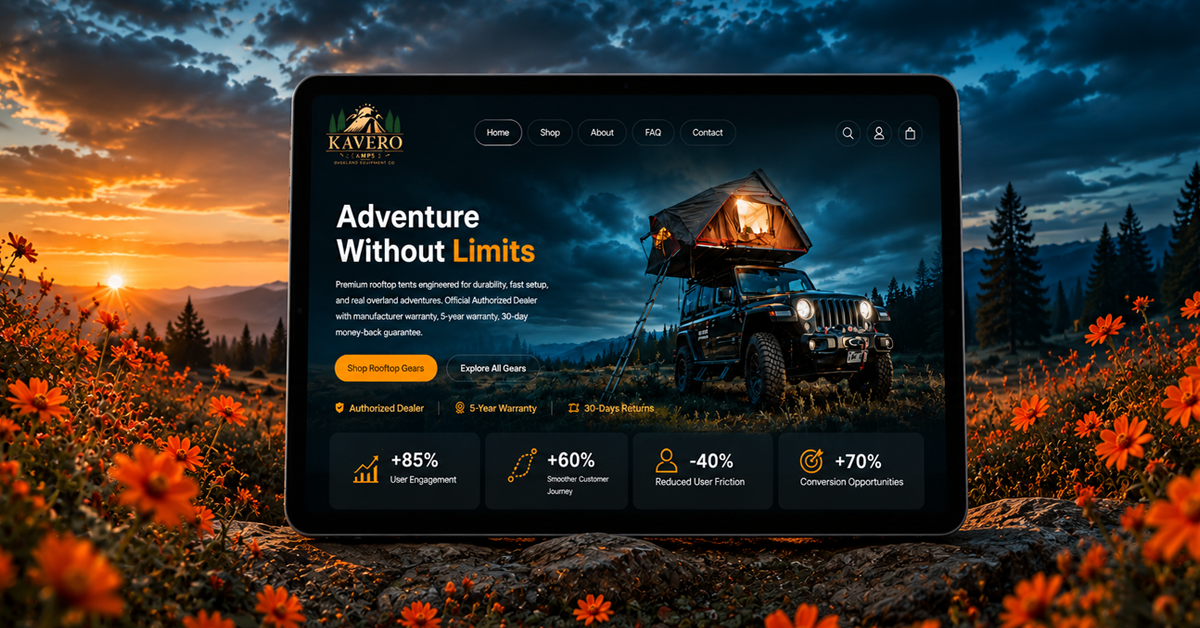
    KAVERO Camps homepage redesign shown on a tablet, displaying a +85% increase in user engagement, +60% smoother customer journey, -40% reduction in friction and +70% increase in conversion opportunities
    The redesigned KAVERO Camps homepage, engineered to turn browsers into bookings.

    The Challenge

    As a camping brand in the US, KAVERO Camp is committed to delivering adventurous outdoor experiences and turning visitors into real-life campers. However, their website is struggling to deliver the same experience online, highlighting the need for a digital transformation.

    KAVERO needed more than a visual refresh. Their existing website was not engaging potential visitors toward action. This friction throughout the customer journey was causing a decline in enquiries at exactly the wrong time of year. Their clear brief was to identify what was holding conversions back, and fix it asap.

    What Prox Delivered

    CRO & UX Strategy

    Prox’s team mapped KAVERO’s entire user journey from landing to enquiry, identifying friction at every stage and systematically removing it. Each touchpoint was optimised to remove friction and encourage visitors to take action.

    Website Revamp

    Alongside the strategy work, we re-designed and built a modern website engineered for performance and usability, giving KAVERO a digital space that finally matched the quality of their brand and the experience that keeps campers coming back.

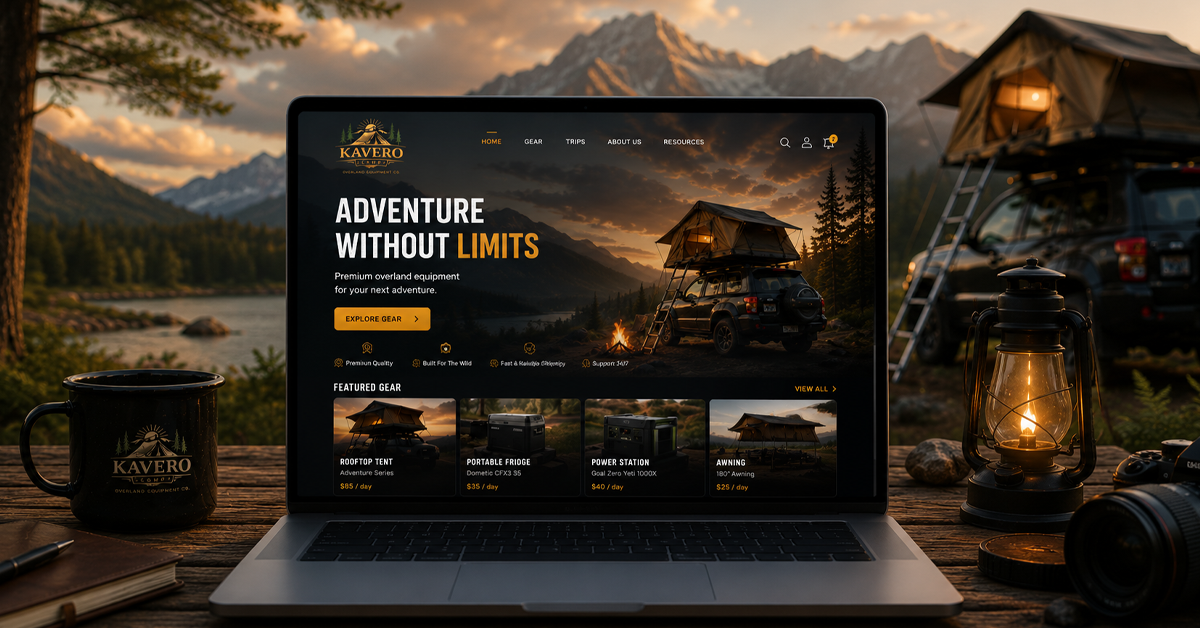
    Desktop view of the redesigned KAVERO Camps homepage with the new featured gear section
    The new KAVERO Camps desktop experience, rebuilt for performance and usability.

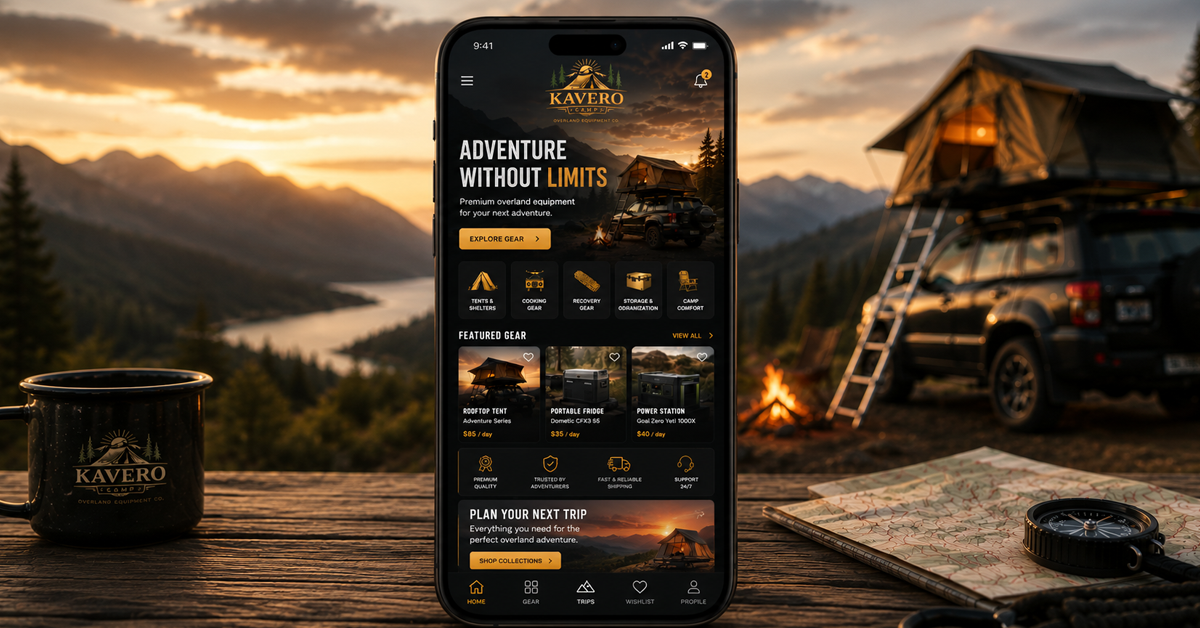
    Mobile view of the redesigned KAVERO Camps homepage on a smartphone
    The mobile experience got the same CRO-first treatment as desktop.

    The Results

    The numbers below tell the story of Prox’s impact on KAVERO Camp.

    • +85% increase in user engagement
    • +60% smoother customer journey
    • -40% reduction in user friction
    • +70% increase in conversion opportunities

    What stood out most was the speed of this transformation. KAVERO started seeing qualifying leads within just 13 days of the new CRO strategy going live. That was actually a fast turnaround during a season where every week counted.

    KAVERO Camps website shown on a tablet mounted in a vehicle dashboard, with a hand tapping the featured gear section
    Built and tested across every device KAVERO’s adventurers actually use.

    A Word From KAVERO ⭐⭐⭐⭐⭐

    KAVERO Camp left Prox a five-star review on Trustpilot. They shared how their conversion rates had begun slipping as camping season drew to a close.

    “As camping season was ending, our conversion rates were struggling. Prox turned it around fast by generating solid inquiries within 13 days of launching their CRO strategy. They also redesigned our site to exceed expectations. Highly recommend them for their digital services!”

    Camper using the redesigned KAVERO Camps website on a laptop at a campsite in the evening
    From browsing to booking, wherever the trail leads.

    Ready for Your Own Digital Transformation?

    KAVERO’s results are a good reminder that nothing is impossible when strategic UX thinking meets focused, hands-on CRO execution. If your website’s traffic is not converting the way it should, we would love to take a look and help you figure out why and fix it.

    Revamp Your Brand →

    It’s the kind of transformation covered in our web design guide.

  • Top AI Features to Add to Your Mobile App in 2026

    Top AI Features to Add to Your Mobile App in 2026

    Static screens and generic “Hello” push notifications are now dead. The top AI features for mobile apps in 2026 revolve around silent intelligence. Think on-device AI, adaptive interfaces that evolve with user behaviour, and predictive experiences that anticipate needs before users ask. So, if your brand has a mobile app, it’s only smart to turn it into a proactive partner. To do that, you’ll need a clear AI strategy. At Prox Digital, we specialise in weaving these advanced tech features into your scalable mobile apps. Let’s quickly break down the AI features that matter most in 2026.

    Why AI Is the New Standard for Mobile Apps in 2026?

    Mobile apps with little or no AI integration are increasingly seen as outdated, and no one uses outdated things, no matter how beautiful they look. Speed is the new standard of 2026. Users don’t just uninstall slow apps; they forget them in seconds.

    • One of the biggest AI app development trends 2026 is the shift from cloud dependency to edge intelligence wherever possible. That means your app can continue working in a tunnel, on a plane, or in areas with poor connectivity.
    • Online privacy is not just another legal checkbox; it’s actually the market differentiator. If your mobile application ships users’ data to unprotected server locations, you’re out of the game.
    • Your competitors will win if they offer quick photo editing, voice navigation, and assisted shopping carts, and you’re still spinning the discount wheel on the screen; you’re likely to lose user attention.

    The technology has matured to the point where AI-powered mobile app UK developers can now add these features within standard development sprints. The barrier is not pricing anymore; it’s the willingness to rethink what a mobile app can do.

    Hyper-Personalised Feeds That Adapt to Every User’s Behaviour

    The moment users open an app, they expect quick, personalised content instead of generic feeds. Because AI-powered personalisation has made generic content boring. AI now analyses users’ microbehaviours, such as pausing on a particular video, instantly skipping content, or repeatedly tapping specific areas of the app. Let’s say you order your daily coffee through a mobile app. AI-powered personalisation has already learned your behaviour. Instead of showing the entire 30-product menu, the app displays only the three coffee options you order most often. That’s hyper-personalisation in action. It’s an AI mobile app feature that understands user behaviour and delivers a faster, more relevant experience.  This is where Prox Digital steps in. We don’t just plug in a recommendation API. We build real-time pipelines that adapt to your inventory changes instantly. Adding this feature will transform your standard e-commerce mobile app into a personal shopper, not into another generic online shop. 

    AI Chatbots and Virtual Assistants for Customer Support

    The “how to add AI chatbot to mobile app” query is no longer alive. In 2026, nobody wants a robotic FAQ bot that loops them into a dead end. They want a human-like assistant that can handle multi-turn reasoning and conversations.  AI’s most powerful thing is that it remembers you said “I’m from UK” three messages ago. That’s the reason AI features for mobile apps 2026 must include agentic bots that execute tasks, not just chat. They help you book appointments and even upsell gently without sounding robotic.

    • AI Voice assistant feature: When users talk, the AI don’t type, it talks back. 
    • Screen awareness: The bot sees the product you’re viewing and answers specific questions about it.
    • Sentiment judgment: If the user sounds angry, the bot escalates to a human immediately without being asked.

    If you run a service-based firm looking for AI app features for local businesses, a smart assistant keeps your alerts on at 2 am when you’re asleep. That’s what customer success looks like. Prox Digital designs these agents to handle tricky dialogues, ensuring your brand voice stays crisp even when the AI is improvising. Not sure where to start? Our guide on how to create an app for small business in 2026 covers the basics.

    Voice Search and Voice Commerce Features

    Keyboards are losing ground. Today, voice is considered the new touch. The rise of spatial computing and smarter wearables means users are now speaking their needs to AI-powered mobile apps. The phenomenon is not just a simple speech-to-text. It’s natural language understanding (NLU). 

    • When a user says, “Pull up the cloud monitoring dashboard I checked yesterday before the server outage” and the app knows. It parses “cloud monitoring data,” “checked yesterday,” and “before outage” against the user’s search history.
    • Voice commerce also cuts the friction of checkout. “Order a fresh bun from the nearest open bakery.” Boom. It’s done. 

    For mobile app AI features for small businesses, voice reduces the steps between craving and conversion. It’s a future-proof mobile app features 2026 strategy that prepares you for a screen-less future.

    Predictive Analytics for Smarter Business Decisions

    Increased guesswork can ruin cash flow. Predictive analytics embedded in your app does not just serve users; it serves owners. The backend identifies that this user repeatedly accesses the same Google Doc every Monday morning. It preloads those files even before the app opens, making the experience feel instant. That’s the backbone of the best AI features for business apps in 2026.

    • Churn prediction: The app identifies users who are losing interest, and before they uninstall it. 
    • Dynamic pricing hints: Predictive analytics also suggests discounts before products go out of season.
    • Inventory intelligence: It alerts you when a bulk order is about to stock out.

    When you add AI to mobile app analytics, you move from reactive firefighting to strategic planning. 

    On-Device AI That Protects Privacy and Cuts Latency

    On-device AI is an intelligent feature that runs directly on the phone. It reduces the need to send data to the cloud or an external server. For example, your camera filters snap instantly, and your chat translations happen without a single byte leaving the phone. This is critical for AI app development trends 2026.  Consumers are super aware of data leaks. Banks and health apps demand on-device AI to stay compliant. Speed matters just as much as privacy, so pair on-device AI with our guide on how to reduce app and website load time by 40%.

    Generative AI for Content, Search, and Product Discovery

    The old search was keyword matching. The new search is intent-based and visual. Generative AI features in mobile apps let users take a photo of a stranger’s sneakers and find the exact pair in your shop.  In short, the generative AI search feature in mobile apps helps users discover products faster in your inventory. They find what they need with just a few words or an image without endless scrolling. This is the magic that drives rapid engagement. See how this plays out in practice in our breakdown of mobile app design for UK retail.

    AI-Driven Push Notifications and User Retention Tools

    Generic push notifications are easy to ignore and are often spam. AI sends personalised notifications that users are more likely to open. The AI calculates the user’s daily login patterns. That’s the ‘Golden window’ telling the exact minute they are most receptive based on sleep patterns, past open rates, and current activity. 

    • Deep-link prediction: AI-driven push notifications take the user to the exact frame they need, not the entire home screen.
    • User Retention: “Do you still need a hosting?” is boring. “Your website hosting plan is ready. Activate it today?”

    Retention is typically the difficult part. However, for clients that focus on AI mobile app features for local businesses, this user retention AI feature brings back regular customers without a massive marketing team. If retention is already a struggle before you add AI, it is worth reviewing these 10 iOS app design mistakes that kill user retention first. 

    Choosing the Right App Development Partner for AI Integration

    Coming up with ideas is easy. Building them is harder. Business owners now need a team that understands the difference between a demo and a production-grade app.  The key is to choose a mobile app development agency that thinks like a product owner, not just a coder. They must ask the right questions like “Who will use your app?, When do they use your app most?, When will they stop using it?”  The right agency must prototype fast, test early, and iterate publicly. Prox Digital Agency operates as that strategic partner. We bridge the gap between raw AI models and a polished App Store experience. Our goal is not just to add advanced, trendy app features. But the goal is about delivering a better user experience. Still comparing options? Our roundup of the 9 best UK app design studios and freelancers is a good place to benchmark agencies.  Prox does not just build your app. They future-proof your online business through revenue-generating AI-powered mobile applications.

    FAQs

    What is the cost of integrating generative AI into an existing mobile app?

    The cost of integrating generative AI into existing mobile apps typically ranges between £3,740 and £44,885 ($5,000 and $60,000). The generative AI mobile app development cost depends on the complexity of the model and the device’s capabilities.

    Is on-device AI beneficial for small local businesses?

    Yes. Mobile app AI features for small businesses are often more transformative than for enterprise-grade businesses because they replace the need for large support or marketing teams. 

    What are the best generative AI features in mobile apps for retail?

    The best generative AI features in mobile apps include visual search and dynamic user interfaces. Users can take a photo to find matching products or virtually try on clothes, helping retail businesses deliver a smarter shopping experience.

    For the fundamentals behind the full build process, see our complete app development roadmap, or talk to our app development team in London.

  • The Complete Guide to Rebranding in 2026 for UK Businesses

    The Complete Guide to Rebranding in 2026 for UK Businesses

    In 2026, high streets are tougher, and customer expectations have shot up. Therefore, reshaping how your business looks, sounds, and feels to the outside world is becoming crucial. Branding is more than a new logo. It’s a whole identity shift. And for UK small businesses, why rebranding is important comes down to one truth: a tired brand pushes people away.

    The Prox Creative Agency team has structured this guide to walk you through the key factors that influence the rebranding process step by step in UK style. Let’s get started!

    What is Rebranding in 2026?

    In 2026, Rebranding refers to the digital transformation that redefines the identity and purpose of a brand or business.

    Basic rebranding includes

    • Content refresh
    • Interactive visuals
    • Motion design
    • Emotional brand connection
    • Flexible visual identity

    Whereas, advanced rebranding includes advanced digital transformation and brand optimisation. It includes

    • AI personalisation
    • New brand strategy
    • Customer experience overhaul
    • Employer branding
    • Brand repositioning
    • Product or service repositioning and more

    Why Your Local Business Might Need a Rebrand in 2026

    When your business no longer aligns with your values and fails to satisfy customer needs, rebranding becomes essential. Let’s say you evolved your business strategies, but your brand appearance has not changed a bit. It still uses the same logo, outdated product images, and a tired UX.  Such problems can be solved by rebranding for local businesses in UK.

    Quite simply, why rebranding is good because when your branding sends mixed messages to customers, rebranding creates a clear and consistent identity.

    7 Signs a UK Small Business Is Ready for a Rebrand

    Not sure if it’s time? Here are the flashing indicators to begin with rebranding.

    • Your look feels old-fashioned. Customers hint at it, or you can feel it yourself.
    • You have changed what you do. Your name says “SEO Agency,” but you now offer full-service digital marketing.
    • Your branding is visible but easily forgettable because of mismatched fonts, colours, and styles.
    • Your logo doesn’t feel “you” anymore.
    • You’re attracting the wrong audience.
    • You’re planning to grow at a new location, franchise, or with a new product line.

    Did you check 3 or more from this list? It’s time to explore a rebranding strategy.

    What Is a Rebranding Strategy?

    Rebranding strategy is the roadmap that sews your new look to your business goals. A solid rebranding strategy local business owners can trust starts with a brand audit, defines your ideal customer, and sets out exactly what you want to change and why.

    Rebrand your business in 2026 only when you’re ready, and you’re aware of how to do it strategically. Since you don’t just want to change the wallpaper, right?

    Brand Refresh vs Full Rebrand: What’s Right for Your Local Firm?

    Not every overhaul needs to be a clean sweep. These two terms refer to two different ideologies, reasonings, and strategies. Let’s have a look.

    • Brand refresh includes refreshing the brand colour scheme, modernising the logo even more, improving product listing and imaging. Changing a few things but keeping the brand name and core identity untouched is a brand refresh.
    • Full rebrand includes having a new brand name, entirely new visuals, and repositioned messaging. If your firm is radically changing its direction or getting merged into something new, a full rebranding helps.

    How Much Does Rebranding Cost for a Small Business in the UK? (2026 Budget Guide)

    In the UK, a basic to advanced rebranding can cost you £3,000 to over £150,000. The cost range varies depending on your company’s scope, size and positioning.

    Rebranding figures in the UK look something like this.

    Rebrand Level Rebranding Cost Features includes
    1 DIY refresh £200 – £800 Logo refresh, changed social templates, updated GBP images or info.
    2 Freelancer refresh £800 – £3,000 Professional logo, colour palette upgrade, basic brand guidelines.
    3 Small UK agency rebrand Starts from £3,000 – £8,000 Complete visual identity enhancement, Physical branding, and basic website updates.
    4 Large agency rebrand Starts from £8,000 – £20,000+ Strategic research, naming, complete identity makeover,  website rebuild, and proper launch campaign.

    Remember, treat the cost to rebrand a small business UK 2026 as an investment, not an overhead.

    Also, there are some less obvious things to consider when rebranding businesses in 2026, including local dialect and naming, planning rules & council restrictions, previous stock run-out,  fresh staff kits, and landlord permissions if on lease. Avoid these, and you can experience a delay in your launch and budget waste.

    How to Do Rebranding in 2026: The Step-by-Step Process

    Follow a clean rebranding sequence for 2026.

    Step#1: Brand Audit

    Collect honest feedback from your business employees, regular customers, and even those who walk past without checking in.

    Step#2: Define Your Objective

    Understand and dominate your mission, values, personality, and that one difference only you offer.

    Step#3: Draft a Creative Brief

    Even for a DIY project, put your draft on paper. It keeps you focused.

    Step#4: Design and Test

    Design a mock-up and show it to a trusted handful of locals and team members.

    Step#5: Build a Brand Toolkit

    Choose your final logo, colours, fonts, imagery style, and tone of voice all on one final document.

    Step#6: Roll out everywhere

    Edit every ting detail on your website, Google Business Profile, socials, email footer and everywhere to build credibility.

    Step#7: Internal Launch & Then External Launch

    Get your team excited first. Explain the “why” behind the rebrand clearly. And then make noise in your community. Add an event, a special discount offer, or a local press story.

    Step#8: Track and Adjust

    See how customers are responding to the launch. Note down their feedback, fill out survey forms and track post-launch performance. Check if any adjustments are required.

    Local SEO Rebrand Checklist: Google Business Profile, Citations & Website Updates

    A rebrand can hurt your local visibility if you’re not focused. Rebranding and SEO UK go hand in hand; follow this list to protect rankings:

    • Google Business Profile: Update name, logo, description, and photos. Post an announcement.
    • Domain: Use 301-redirect for every old URL.
    • NAP consistency: Name, Address, Phone number must be identical across all directories.
    • Citations: Audit and update key listings.
    • Review replies: If visitors leave any reviews, take them seriously and respond quickly.

    6 Rebranding Mistakes to Avoid

    Rebranding mistakes UK small firms make are painfully common.

    • Copying a competitor just because they rebranded and look cool.
    • Ignoring how attached local customers are to certain elements of your brand.
    • Forgetting digital touchpoints. A new website, but outdated social media pages.
    • A logo without a narrative.
    • Under-budgeting is like a cheap logo, cheap signage, and a cheap impression.
    • Rushing the launch.

    The reason why companies do rebranding is that they need to refresh their business identity, not to confuse their audience. So, avoiding these mistakes can surely help your rebrand achieve its true purpose.

    What Makes a Successful Rebranding Campaign in 2026

    Successful rebranding is never about the creative most logo. Success comes from a clear strategy, a clear understanding of the local market,  Cohesive implementation, and the confidence to share your brand story. Customers only commit when they feel themselves as a part of the journey.

    With the right rebranding tips for UK companies, you can transform your presence without losing the local loyalty you’ve built. At Prox Digital Agency, we help UK businesses navigate the entire rebranding process step by step with zero confusion.

    From brand strategy and design to local SEO protection and community launch, Prox takes care of all. Ready to make your business the one everyone’s talking about in 2026? Let’s have a one-on-one discussion.
    If you also need sharper messaging once the new identity is set, see our guide to the psychology of CTA copywriting. And when you’re ready to move, talk to our creative branding agency.

    FAQs

    1. What are the questions to ask when rebranding?

    • What do our customers love about us that must never change?
    • Which audience are we trying to attract?
    • What will be the result of our rebranding?
    • Would our regulars still find us with a new name?
    • What sets us apart from our competitors?

    2. How long does a rebrand take for a small UK company?

    A typical rebranding finishes in 4 to 8 weeks. A brand refresh takes 2 to 3 weeks, while a new website and a complete identity makeover can take up to 3 to 4 months in the UK.

    3. How to rebrand my small business without losing local customers?

    To rebrand without losing local customers, announce the reason for the change on social media platforms, engage your local audience, and introduce the new brand gradually while keeping familiar elements.

  • PROX DIGITAL AGENCY BRINGS ENTERPRISE-LEVEL SEO & GEO TO SMEs

    PROX DIGITAL AGENCY BRINGS ENTERPRISE-LEVEL SEO & GEO TO SMEs

    Over the years, Prox Digital Agency has built its name offering search visibility to clients across London, Australia, the USA, and the UAE. Somewhere along the way, that successful reputation turned into an assumption that Prox Digital was an agency for enterprise budgets only.

    It never was.

    “There’s a perception out there that we only partner with established companies. That’s never been accurate,” said Ali Zafar Azad, Founder of Prox Digital Agency.

    “A local real estate marketer in the town gets the same playbook as any large enterprise. Same strategy, same tools: Just a different scale.”

    The update comes as online search continues to change. Traditional SEO is still about ranking on Google and Bing, whereas Generative Engine Optimisation, or GEO, determines whether a business pops up inside the AI-generated answers from ChatGPT, Gemini, and Google’s AI Overviews.

    Search used to mean one thing. Now it means two – The search engines and AI assistants,” Azad said. “Businesses that ignore either one are only half-visible.”

    Prox takes every SME client through the same process as its enterprise clients. Complete audits, uncompromised content strategy, technical optimisation, and ongoing tracking, with nothing stripped down for smaller budgets.

    “We don’t do a scaled-down version,” Azad said. “The same standard is applied to small businesses.”

    Why Does This Explanation Matter Now?

    The Prox Digital Agency’s teams operate across the UK, the US, Dubai, and Australia, supporting clients internationally. But the purpose behind this announcement is not just operational, it’s structural. Large companies easily hire in-house SEO and GEO specialists to track this shift.

    But most small businesses can’t, and are left competing in the exact same search results with generic tools or no strategy at all.

    Prox’s search analysts have flagged a similar pattern industry-wide, where consumers are increasingly skipping search results altogether and asking AI tools directly for answers. A business invisible to AI is, automatically, just invisible.

    “GEO isn’t optional anymore. It’s the new front door.” Azad said.

    Small businesses refrain from contacting our team and keep telling us the same thing. “They assumed we were out of reach. That’s totally their wrong assumption.”

    Prox offers SEO and GEO strategies for SMEs starting at $500, a price point the agency says was chosen deliberately. That’s low enough for a small or newly launched business to justify, structured to match its enterprise standards.

    “We wanted to set a starting point that didn’t force small business owners to choose between doing SEO well or not doing it at all,” Ali Zafar Azad said.

    Pricing aside, the agency’s measuring criteria are the same ones it has always used, i.e., rankings, organic traffic, and visibility inside AI-generated answers.

    Encouraging SME Clients To Have The Best Yet Affordable SEO and GEO Consultancy

    Prox serves both large and small businesses, using the same audit, content, and consulting process for every project. The table below outlines Prox’s SEO and GEO deliverables at different pricing tiers.

    Packages Starting From Perfect For Deliverables
    Core SEO $500 SMEs Keyword Research, On-page SEO, monthly reports, and technical audits.
    SEO and GEO Growth Custom pricing Growing businesses SEO, GEO, and content strategy. AI search optimisation and technical SEO.
    Enterprise-level SEO and GEO Custom pricing Established businesses Enterprise-level audits, GEO strategy, SEO consulting, and ongoing optimisation

    “Book a consultation. We’ll show you exactly where you stand.” 

    It combines SEO and GEO fundamentals built for growing businesses.

  • Prox Enters Its Next Era With a Complete Evolution For The AI Age

    Prox Enters Its Next Era With a Complete Evolution For The AI Age

    Over the last decade, Prox Digital Agency established itself by delivering high-performing websites, branding, SEO, and digital growth strategies for global leading startups, scale-ups, and established organisations. By 2022, the agency had partnered with more than 500 brands across multiple industries.

    Then everything changed.

    The rise of AI search, generative experiences, and changing customer behaviour reshaped how people discover, evaluate, and trust businesses online. Search was no longer just about rankings. Websites became more than digital brochures. Customers began making buying decisions across Google AI Overviews, ChatGPT, Gemini, social platforms, review websites, and brand experiences long before speaking to a company.

    Rather than adapting around the edges, Prox chose to rebuild from the ground up.

    Beginning in 2023, the agency started a company-wide transformation, redesigning its services, internal frameworks, delivery systems, customer experience, design philosophy, and technology stack to meet the demands of modern businesses.

    Three years later, that evolution is complete.

    The Framework

    The new Prox introduces a connected growth model where strategy, branding, website development, SEO, Generative Engine Optimisation (GEO), AI visibility, content strategy, conversion optimisation, and performance marketing operate as one integrated system instead of disconnected services.

    Every engagement now begins with a structured discovery framework that analyses customer behaviour, business objectives, competitive positioning, search intent, and AI visibility opportunities before execution starts.

    AI Powered Solutions by Prox

    The agency has also introduced modern delivery frameworks powered by the latest AI technologies, automation systems, collaborative workflows, and enterprise-grade development practices. These enhancements enable faster execution, stronger strategic alignment, and measurable business outcomes without sacrificing creativity or quality.

    “Our industry has changed faster in the last three years than it did in the previous decade,” 

    — said Ali Zafar Azad, Founder of Prox Digital Agency.

    ‘We realised clients no longer needed another agency selling separate services. They needed one strategic growth partner that understands how brands are discovered, trusted, and chosen in an AI-first world. So we rebuilt everything around that reality.’

    Alongside its operational transformation, Prox has expanded its international presence. Today, the agency operates from its UK headquarters while extending its reach across the United States, Orlando, and Melbourne, supporting ambitious businesses with globally connected digital strategies.

    The evolution also introduces new proprietary strategic frameworks focused on digital authority, AI discoverability, customer experience, and sustainable business growth, helping brands compete across both traditional search and emerging AI-powered discovery platforms.

    As businesses continue navigating one of the biggest shifts in digital marketing history, Prox positions itself not simply as a digital agency, but as a modern growth partner built for what comes next.

    With a decade of experience, more than 500 successful brand partnerships, and an agency rebuilt for the future, Prox enters its next chapter with one clear mission: assisting and inspiring global brands to become impossible to ignore in the age of AI.


    See what that AI-era shift actually means in our GEO guide.

  • SEO vs GEO in 2026: The Complete Guide

    SEO vs GEO in 2026: The Complete Guide

    That’s Generative Engine Optimisation (GEO) in action. And it’s changing the game for local businesses just as much as it is for big e‑commerce brands.

    In 2026, you don’t just need to rank on page one. You need to be the source that the AI pulls its answers from. Prox Digital Agency breaks down exactly what is GEO vs SEO means, and how your UK business can get ahead without disturbing rankings.

    What is SEO (Search Engine Optimisation)?

    Search Engine Optimisation (SEO) is the process of optimising a website for increased online visibility and rankings, so that it appears in the “blue link” results on Google, Bing, and other search engines.

    You have probably been doing SEO or paying someone else to do it for you for years. SEO primarily focuses on

    • Keywords or queries people type in
    • Page load speed and mobile friendliness
    • Backlinks from other websites
    • Meta titles and descriptions
    • Local SEO signals like your Google Business Profile

    When all these SEO factors work together, they bring in higher rankings, improved CTR click-through rates, and greater footfall.

    What is GEO (Generative Engine Optimisation)?

    The newer piece of the puzzle, Generative Engine Optimisation (GEO), doesn’t just rank pages; it optimises your web pages and content to be cited, quoted or recommended by AI search platforms like Google AI Overviews, ChatGPT, perplexity, voice assistants, and others.

    GEO understands, interpret and re-utilise your content when they need it for generating answers.

    For example, when a user goes to Google and searches for “how much do web design agencies cost in the UK?”, the AI-generated answer that appears at the top of the search results is optimised by Generative Engine Optimisation (GEO).

    If SEO says “click my link,” GEO says “cite my business as the best answer.”

    That’s a big shift. Because frequently, the AI won’t show a page link at all. It will just speak your answer or display it in a summary box at the top (AI Overview). If your content isn’t structured for GEO, you’re invisible, even if your SEO is spot on. So, now you must set your priorities!

    GEO vs SEO: What’s the Difference?

    Here’s a quick comparison of SEO vs GEO: what you really need to know.

    Factor SEO GEO
    1 Primary goal Rank high in SERPs and earn clicks. Be cited in AI‑generated answers.
    2 Optimises for Keywords, backlinks, and page speed. Clarity, structure, authority, and consistency.
    3 Typical result Users visit website or web pages. User get answers through AI summary or voice reply.
    4 Key strategy On‑page content + links. Structured data, concise Q&A, direct answers, and reliable facts.
    5 Local focus Google Business Profile and NAP citations. Accurate, machine‑readable business info.

    Do you think they are opponents? No! In fact, they work like magic together. However, traditional SEO alone in 2026 is not enough anymore and you’re missing a bigger chunk of potential customers without working on GEO.

    “SEO + GEO = Higher Rankings + AI Citations + More Traffic

    SEO − GEO = Rankings Without AI Visibility”

    SEO vs GEO Business Impact – Why It Matters for UK Local Businesses in 2026?

    One of the biggest problems arising from this traditional SEO vs AI search shift is declining CTR (click‑through rates).

    GEO prioritises only the accurate and complete information you provide in your content. So, when someone searches for “best mobile app development agency near me,” Google or AI-generated results will show a list of local businesses with phone numbers, reviews, a short summary, or a map pack.

    This concise information gives users what they need without them ever visiting a full website.

    If your business is not the source feeding that answer box, someone else is and here you’re losing leads even if your traditional SEO looks perfect.

    This is the “zero‑click” world, and it’s reshaping the future of SEO 2026 forever. Winning in it means combining solid SEO foundations with generative AI search optimization techniques that help your content become the answer, not just a link.

    GEO vs SEO Explained Through a Real-World Example

    Take two mobile app development agencies in London; Agency XYZ and Prox Digital Agency.

    • Agency XYZ has a blog stuffed with keywords like “best mobile app developer London” and “iOS app development UK.” It ranks highly in the traditional blue‑link results.
    • Prox Digital Agency has clear, structured service pages. It answers specific questions like “Do you integrate third party tools or do you scale existing apps in UK?” in a concise FAQ section. Prox’s Google Business Profile, LinkedIn profile, and website all show the same company name, address, phone number, and client reviews strengthening their local SEO UK signals while also feeding AI search optimization efforts.

    So, when a founder types into Google’s AI, “Which London app agency scale existing mobile apps?”, Prox Digital Agency’s information is far more likely to be summarised, even if Agency XYZ ranks #1 organically.

    That’s the real difference between SEO and GEO in 2026. The AI prioritises clarity, structure, and verifiable authority over keyword density, making GEO ranking factors like accurate business data and plain‑language answers the new visibility drivers.

    What GEO Optimisation Looks Like in Practice

    If you want a clear vision on how SEO vs GEO for small businesses work. Here’s what you’ll need to focus on for GEO optimisation.

    • Clarity and straightforward answers. If your page answers a question, make that answer immediate and easy to extract.
    • Structured data (Schema). Mark up your FAQs, your business details, and your service areas. This helps machines read your content reliably.
    • Consistent information everywhere. Your business name, address, phone number, opening hours, and services should be identical on your website, Google Business Profile, and any other platform.
    • Entity‑rich content. Mention related topics naturally. A real estate developer might reference critical infrastructure, housing, and property marketing. This helps AI understand the context.
    • Authoritative and specific claims. Back up what you say. If you claim “over 500 five‑star reviews,” make sure that’s true and visible.

    Notice that GEO doesn’t throw keywords out of the window. It simply builds on them with structure and authority. That’s the reason why SEO must be there with all it’s keyword strategies.

    Is SEO Dead in 2026?

    After GEO getting all the hype, you must be wondering, “Does GEO replace SEO?” No. It Absolutely matters.

    SEO is still the main driving force of traditional results, the Google’s local three-pack,  images, videos and carousels. It still drives website traffic and direct conversions. And high‑ranking pages often feed the AI’s training data in the first place.

    Think of it this way:

    “SEO gets you in the race.

    GEO gets you at the forefront when the AI generate answers.”

    Therefore, you need both.

    How to Build a Combined GEO vs SEO Strategy for Your Local Businesses

    You don’t need a massive budget to get this right. Here’s are SEO + GEO best practices for local businesses.

    1. Get Your Information in Order

    Centralise your business data. At a minimum, ensure your Google Business Profile is fully complete, accurate, and updated weekly if needed. Map out your NAP across all online directories and make corrections. AI engines love consistency.

    2. Write for Humans, Structure for Machines

    A direct, concise summary of what a service offers should be clear on every page. Optimising headings as H2s, H3s, or H4s, with short, understandable paragraphs. An informative FAQ section at the bottom. This structure perform well for humans as well as for machines.

    3. Embrace Conversational Queries

    More and more searches in the UK are voice‑driven or typed as full sentences: “Who’s the most reliable mobile mechanic in UK?” Your content needs to answer those directly. Create pages or blog posts that mirror that natural language.

    4. Be the Definitive Source Locally

    If you’re an app developer, publish HowTo guides, local delivery area maps, and quick answers to “What are the best gaming apps in the UK?” These detailed, contextual pieces signal to AI that you know your work and that you serve a specific location.

    5. Build Real Authority Through Links and Reviews

    Ask for genuine reviews from your customers. Ask them to put their feedback on Google and on relevant sites. Earn local backlinks from news articles, or community blogs. Both SEO and GEO rely heavily on signals of trust.

    SEO vs GEO for Small Business: Where Competitors Fall Short

    You’ll see a lot of GEO advice focusing on massive product catalogues and PIM (Product Information Management) systems. That’s great for e‑commerce, but not for consumer services or personal & household services.

    For a small UK business, the closest thing to a PIM is simply having a fully filled‑out Google Business Profile, matching details across online directories, and a well‑structured website. You just need to be thorough and a straightforward generative engine optimization checklist can keep you on track. That checklist covers basics like your business name, address, phone number (NAP), correct opening hours, and answered customer questions.

    Here’s where most generic advice misses the point. It ignores the local discovery angle, which is exactly where the real SEO vs GEO business impact hits small firms.

    Google’s AI Overviews lean heavily on map and local signals. If your Google Business Profile has no recent posts, outdated hours, or unanswered Q&As, you’re quietly blocking your own GEO chances. Ignoring these free signals is like leaving your shop door half open while your competitor rolls out the red carpet.

    SEO and GEO Ranking Factors for 2026 – What the AI Looks For

    As we look at the GEO vs SEO future, here are the signals that matter most for being cited in generative answers. This list is based on current patterns and Google’s own patents:

    • Relevance and specificity to the query
    • Clarity of the answer (a concise snippet)
    • Authority (reviews, citations, link signals)
    • Semantic structure (correct headings, schema, entity links)
    • Consistency of information across the web
    • Recency (updated content signals freshness)

    These factors overlap heavily with smart SEO. That’s why the SEO vs GEO for small business debate is not about picking one side. Good GEO work amplifies what you’re already doing, rather than replacing it.

    Partnering With The Right SEO and GEO Experts in UK

    SEO vs GEO is not a battle. It’s a partnership. One helps customers find you; the other helps AI recommend you. In 2026, UK local businesses that grasp this dual approach will take leads from competitors still stuck in a keyword‑only world.

    Start small. Get your information accurate. Write clearly. Think about the questions your customers voice into their phones. And if it feels overwhelming, have a chat with us at Prox Digital Agency. We specialise in helping UK local businesses build an online presence that works for both traditional search and the AI‑powered search of 2026.

    From Google Business Profile optimisation to content that lands you inside AI overviews, we make sure you’re visible wherever your customers are looking. Because your business deserves to be seen, heard, and chosen.

    If you’re starting from scratch, see our SEO starter guide or our full guide to Generative Engine Optimization (GEO) — or talk to our SEO agency about a combined approach.